
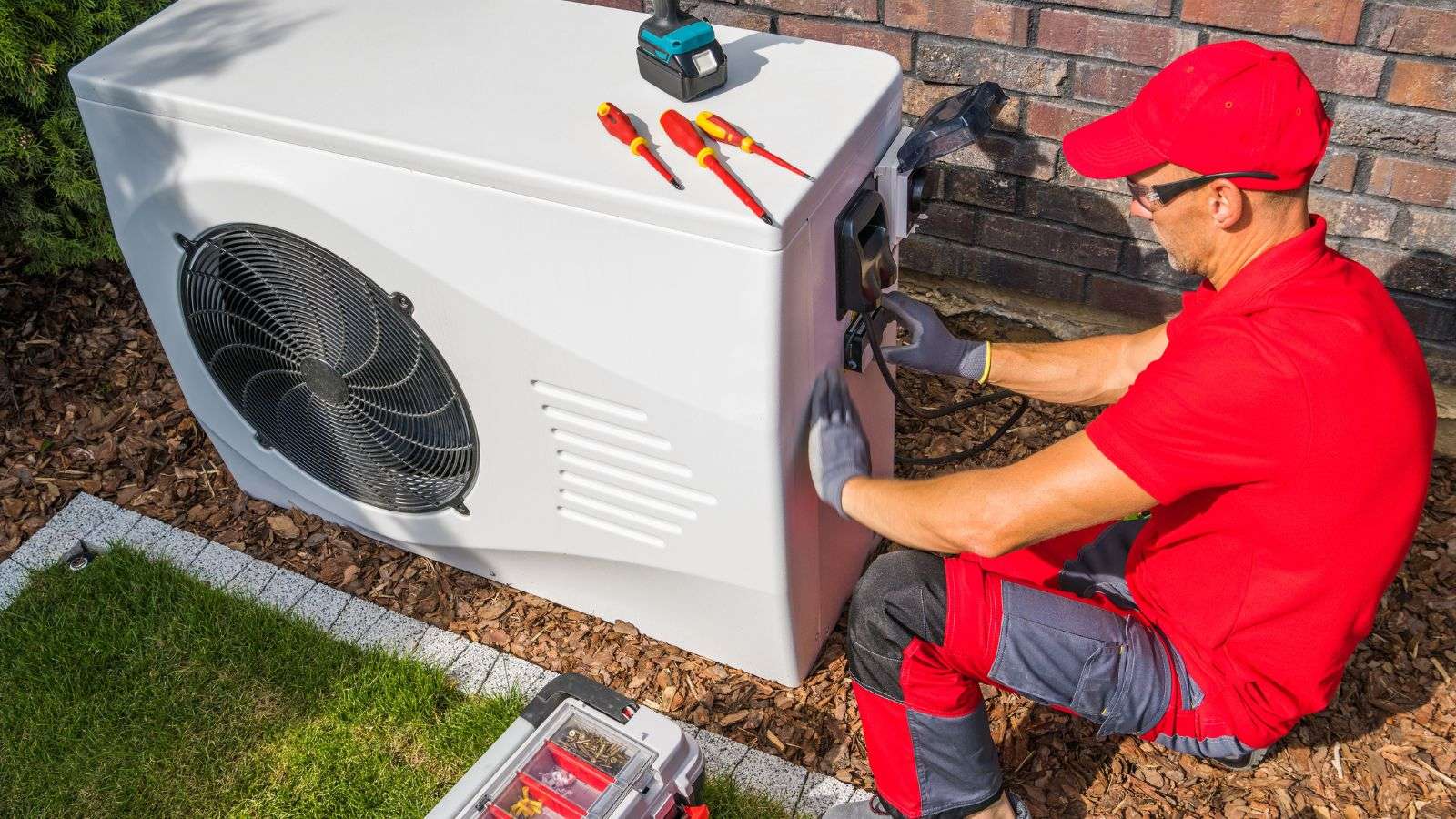
Everyone dealing with brutal Chicago winters knows the importance of a well-functioning heat pump. It can be quite intimidating when your system fails, leaving you stranded in the cold trying to troubleshoot the problem.
In this article, we present a straightforward guide on “How to Troubleshoot Your Heat Pump in Chicago”, incorporating 7 easy steps to effectively diagnose and potentially solve common issues you might encounter.
7 Easy steps to effectively troubleshoot your heat pump in the Windy City
1. Check the thermostat settings
Make sure your thermostat is set to the desired temperature and the heat mode is selected. Make sure the thermostat is working properly by checking the battery level and replacing it if necessary. It’s also a good idea to clean up any dust or debris around the thermostat to prevent interference with its operation.
2. Inspect and clean the outdoor unit
Inspect the outdoor unit of your heat pump for any debris, leaves, or obstructions that may be blocking the airflow. Clear away any dirt or debris that could be hindering the performance of your heat pump. Check the surrounding area for any plants or shrubs that may be restricting the airflow and trim them if needed.
3. Check the air filters
Dirty or clogged air filters can significantly affect the efficiency of your heat pump. Regularly inspect and clean or replace the air filters to keep up with proper airflow. Remember to consult your manufacturer’s instructions for specific guidance on how often to clean or replace the filters.
4. Verify the power supply
Make sure that your heat pump is receiving an adequate power supply. Check if the circuit breaker for the heat pump is tripped or if there are any loose connections. If necessary, reset the circuit breaker and tighten any loose electrical connections.
5. Examine the ductwork
Inspect the ductwork for any leaks or damage that may be causing insufficient heating or cooling. Seal any leaks using specialized duct tape or contact a professional for assistance. Properly insulated and sealed ducts can greatly improve the efficiency of your heat pump.
6. Consider external factors
Take into account external factors that may affect the performance of your heat pump. Windy conditions in the Windy City can impact the efficiency of your heat pump, so make sure there are no obstructions affecting the outdoor unit’s airflow. Check if there are any nearby sources of heat or cold air that may be affecting the temperature inside your home.
7. Schedule regular maintenance
To keep your heat pump in optimal condition, it’s best to schedule regular maintenance with a professional HVAC technician. A qualified technician can perform thorough inspections, cleanings, and adjustments that are essential for the long-term performance and efficiency of your heat pump.
Identifying common heat pump issues
- Insufficient heating or cooling: If your heat pump is not adequately heating or cooling your home, it could be due to issues such as a malfunctioning thermostat, dirty air filters, low refrigerant levels, or a faulty compressor.
- Strange noises: Unusual noises like grinding, squealing, or banging sounds coming from your heat pump may indicate problems with the motor, fan, or other components.
- Frequent cycling: If your heat pump frequently turns on and off, it could be a sign of a malfunctioning thermostat, improper refrigerant charge, or an issue with the heat pump’s control board.
- Frozen evaporator coil: A frozen evaporator coil can impede the heat transfer process and result in insufficient heating or cooling. Low refrigerant levels, dirty air filters, or a broken blower motor could be the cause of this.
- Leaking water: Water leaks around the indoor unit of your heat pump may indicate a clogged condensate drain line or a malfunctioning condensate pump.
- Inconsistent airflow: If you notice inconsistent airflow from the vents, it may be due to issues like clogged air filters, obstructions in the ductwork, or a faulty blower motor.
- Excessive energy consumption: If your energy bills have increased significantly without any changes in usage patterns, it could be a sign of an inefficient heat pump caused by issues like dirty coils, refrigerant leaks, or improper ductwork sizing.
Diagnosing electrical and wiring issues
Diagnosing electrical and wiring issues with a heat pump requires careful inspection and testing. Some common signs of electrical and wiring problems include frequent tripping of circuit breakers, flickering lights, burning smells, and non-responsive or malfunctioning components.
To diagnose these issues, check for loose or damaged wiring connections, inspect the circuit breakers for any signs of overheating or damage, test the voltage and continuity of electrical components using a multimeter, and examine the control board for any burned or damaged parts. You have to prioritize safety during the diagnostic process and seek the assistance of a qualified electrician or HVAC technician if you are not familiar with electrical systems.
Troubleshooting refrigerant leaks and pressure problems
Troubleshooting refrigerant leaks and pressure problems in a heat pump requires careful attention and expertise. Some common signs of refrigerant leaks and pressure issues include inadequate cooling or heating, hissing or bubbling sounds, ice buildup on the indoor or outdoor units, and increased energy consumption. To troubleshoot these issues, inspect the refrigerant lines for any visible signs of leaks, such as oil stains or frost accumulation.
If a leak is detected, it is crucial to locate and repair the leak and then recharge the refrigerant to the manufacturer’s recommended levels. Checking and cleaning the evaporator and condenser coils can help improve the heat pump’s efficiency and prevent pressure problems.
It is recommended to seek the assistance of a professional HVAC technician who is trained in handling refrigerants and has the necessary equipment to accurately diagnose and repair refrigerant leaks and pressure issues.
Understanding how heat pumps work in cold weather
Heat pumps work differently in cold weather compared to traditional heating systems. While they are effective at extracting heat from the air, their efficiency can decrease as temperatures drop. In colder climates, heat pumps rely on a defrost cycle to remove any ice buildup on the outdoor unit. During this cycle, the heat pump temporarily switches to cooling mode, melting the ice and allowing for proper operation.
To guarantee optimal performance in cold weather, you have to properly insulate the outdoor unit and maintain adequate airflow around it. Some heat pumps also have auxiliary heat sources, such as electric resistance coils or a gas furnace, which provide additional heating when needed. It’s worth noting that the efficiency of a heat pump decreases as the temperature drops, and at extremely low temperatures, supplemental heating may be required for sufficient warmth.
When to switch from heating to emergency heat mode
Emergency heat mode should be used in situations where the heat pump is unable to provide sufficient heating. It is typically recommended to switch to emergency heat mode when the outdoor temperature drops below the balance point, which is the point at which the heat pump’s efficiency decreases significantly. This can vary depending on the specific heat pump model and climate conditions.
Emergency heat mode activates the auxiliary heating source, such as electric resistance coils or a gas furnace, to provide immediate and powerful heating. However, emergency heat mode consumes more energy and can be more expensive to operate compared to the heat pump alone. Therefore, it is best to use emergency heat mode sparingly and revert back to regular heat pump operation once the outdoor temperature rises above the balance point.
Checking your thermostat settings and calibration
Checking your thermostat settings and calibration is an important step in maintaining the efficiency and accuracy of your heating and cooling system. Start by ensuring that the thermostat is set to the desired temperature and the correct mode (heat, cool, or auto).
Verify that the time and date settings are accurate as well. To check the calibration, you can use a separate thermometer placed near the thermostat to compare the temperature readings. If there is a noticeable difference, you may need to recalibrate or replace the thermostat.
Try adjusting the temperature settings based on your comfort preferences and energy-saving goals. Regularly reviewing and fine-tuning your thermostat settings can help optimize the performance of your HVAC system and improve energy efficiency.
Inspecting and cleaning heat pump components
Start by inspecting the outdoor unit, also known as the condenser unit. Check for any debris, such as leaves or twigs, and remove them to maintain proper airflow. Next, examine the indoor unit, which includes the evaporator coil and air filters.
Clean or replace the air filters regularly to prevent dust and dirt buildup, which can hinder airflow and reduce system performance. A qualified HVAC technician may need to clean the evaporator coil if it appears dirty or clogged. Inspect the fan blades for any visible dirt or damage, and clean them if necessary.
Finally, check the condensate drain line for any clogs or blockages and clear them as needed. Regular inspection and cleaning of heat pump components help optimize efficiency, indoor air quality, and overall system performance.
Examining your ducts and airflow
Start by visually inspecting the ductwork for any visible signs of damage, such as leaks or disconnected sections. Seal any leaks or gaps using specialized duct tape or contact a professional for assistance. Check for any obstructions or blockages in the ducts that may impede airflow, such as debris, furniture, or closed vents.
Make sure that all vents and registers are open and unobstructed to allow for proper air distribution. It’s also important to clean the vents and registers regularly to remove dust and debris that can accumulate and restrict airflow.
If you notice inconsistent airflow or have concerns about the performance of your ducts, consider having a professional HVAC technician perform a thorough inspection and cleaning to maintain optimal airflow throughout your home.
The importance of regular heat pump maintenance
To start off with, it helps ensure the efficient and reliable operation of your heat pump, which translates to optimal heating and cooling performance. Regular maintenance involves inspecting and cleaning various components, such as the air filters, coils, and fans, to remove dirt, dust, and debris that can hinder airflow and reduce efficiency.
Also, routine maintenance helps identify and address potential issues before they escalate into major problems. This proactive approach can save you from costly repairs and unexpected breakdowns. Moreover, regular maintenance extends the lifespan of your heat pump, allowing you to get the most out of your investment.
Finally, periodic maintenance helps maintain good indoor air quality by keeping the heat pump free from contaminants that can be circulated throughout your home.
How extreme weather conditions affect your heat pump
In extremely cold weather, the heat pump’s ability to extract heat from the air is reduced, which can result in reduced heating capacity. This can lead to longer running times and potentially inadequate heating in very low temperatures. Frost or ice buildup on the outdoor unit can further hinder the heat pump’s operation. Heat pumps are equipped with a defrost cycle to periodically melt any ice accumulation, but during severe cold snaps, this process may not be sufficient.
On the other hand, in extremely hot weather, the heat pump may struggle to effectively cool your home as it relies on transferring heat from indoors to outdoors. The excessive heat can cause the system to work harder and potentially overheat, leading to reduced cooling capacity and increased energy consumption. While heat pumps are designed to operate in a wide range of temperatures, there may be limitations in extreme weather conditions.
When to call a professional for heat pump repairs
If you encounter major issues such as complete system failure, strange or loud noises, or significant heating or cooling deficiencies, it is best to seek the expertise of a professional HVAC technician. If you notice refrigerant leaks, electrical problems, or issues with components such as the compressor or blower motor, it is essential to have a trained professional handle the repairs.
Furthermore, if you have attempted basic troubleshooting steps but haven’t been able to resolve the issue, it is recommended to contact a professional for further diagnosis and repair. For assistance in finding a qualified professional, you can visit our website directory, Big Home Projects, which provides listings of reputable contractors and service providers in your area.