
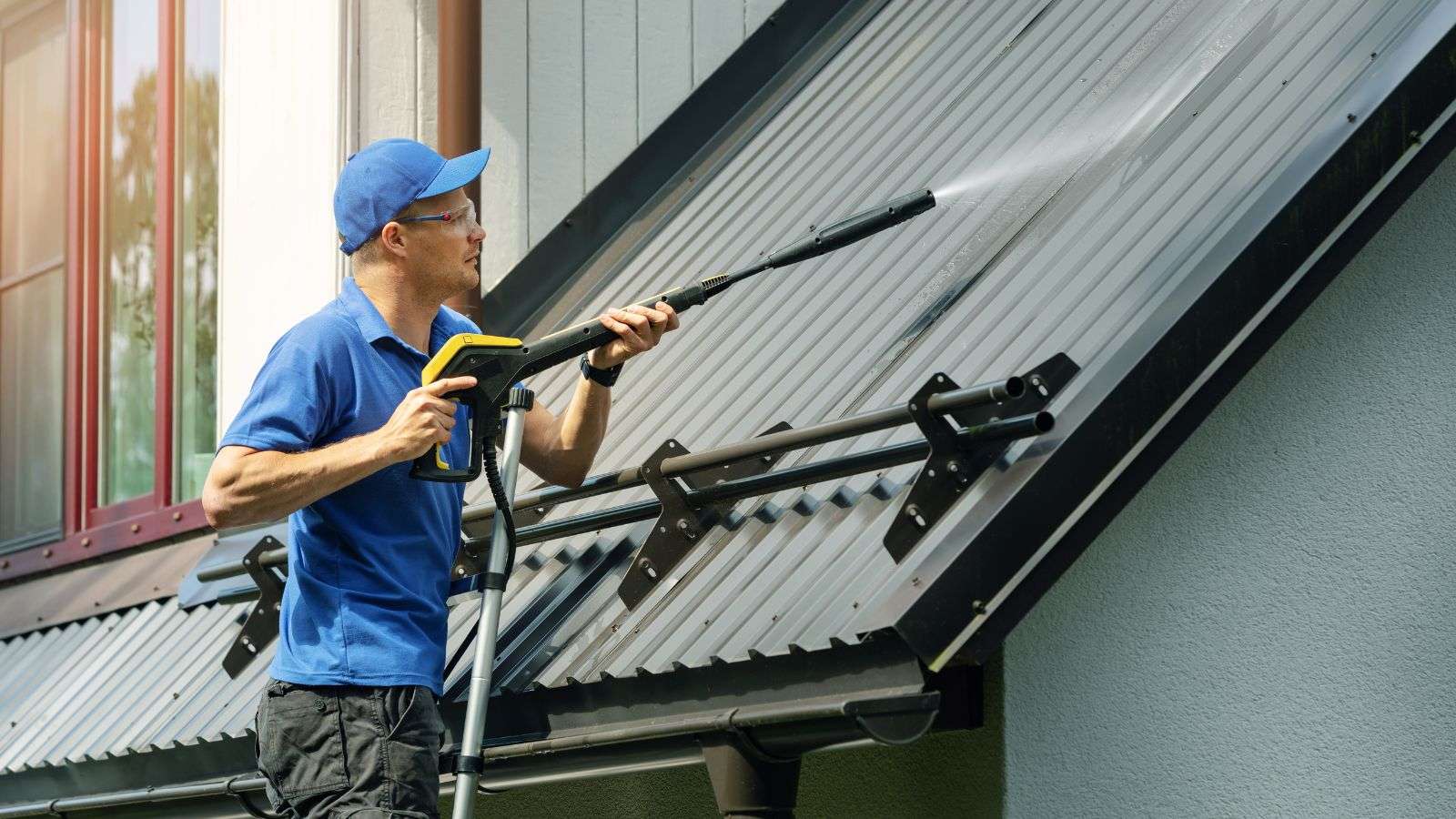
To most homeowners, the idea of roof depreciation is intimidating but seldom addressed. Little do they know, a simple practice like regular roof cleaning can have a significant impact on roof longevity and value.
In this article, we dive into the subject of roof depreciation and the remarkable role regular cleaning plays in slowing the process. We’ll further explore the top 5 DIY cleaning methods that you, as a homeowner, can implement to combat roof depreciation.
5 DIY roof cleaning methods to combat roof depreciation
1. Regular maintenance with a broom or brush
Regularly sweeping your roof with a broom or brush can help prevent the buildup of leaves, debris, and moss, which can cause damage over time. You must be gentle to avoid damaging the roof’s surface, and it’s best to do this on a dry day to prevent slipping. This simple DIY method can go a long way toward preserving your roof’s lifespan.
2. Using a mixture of water and bleach
Create a solution of water and bleach to remove mold, mildew, and algae from your roof. Use a pump sprayer to apply the solution, starting from the bottom and working your way up. Allow the solution to sit for 15-20 minutes before rinsing it off with clean water. Be sure to protect nearby plants and landscaping from the bleach solution.
3. Installing zinc strips
Consider installing zinc strips along the ridge of your roof. When it rains, the zinc will wash down the roof, inhibiting the growth of moss, algae, and fungi. While this method requires some initial investment and installation, it can be a long-term solution for preventing roof depreciation.
4. Using oxygen bleach
Oxygen bleach is a non-toxic alternative to chlorine bleach for cleaning roofs. Mix the oxygen bleach with water and apply it to the roof’s surface using a sprayer. Let it sit for about 15 minutes before rinsing it off with clean water. This method is environmentally friendly and safe for surrounding vegetation.
5. Trimming overhanging tree branches
Overhanging tree branches not only deposit leaves and debris onto your roof but also provide shaded, damp areas where moss and algae can thrive. Trim back overhanging branches to reduce the amount of debris and shade on your roof, which can help prevent deterioration over time.
Understanding the importance of regular roof cleaning
Environmental factors, weather conditions, and natural wear and tear can cause moss, algae, lichen, and other debris to accumulate over time on a roof’s surface. Without regular cleaning, these elements can cause numerous problems, some of which you might not initially associate with a dirty roof.
Roof cleaning can be influential in:
- Preserving roofing materials: Accumulated debris, moss, algae, and other organic material on the roof may trap moisture. This excess moisture can lead to the deterioration of shingles or other roofing materials, inevitably reducing the lifespan of your roof. Regular cleaning aids in preserving these materials by eliminating these harmful elements, thus minimizing future repair or replacement costs.
- Preventing roof leaks: Moss and lichen can lift roof shingles, creating gaps where water can seep into your house. This can lead to a leaking roof and potential water damage to the interiors of your home. Algae and mold, on the other hand, can eat away at roofing materials, creating spots for water to enter. Regular roof cleaning helps in mitigating these issues.
- Increasing energy efficiency: A clean roof can reflect sunlight more effectively, helping to reduce heat absorption and consequently, energy costs. A dirty roof, particularly one infested with dark algae, can absorb heat and increase the temperature inside the home, leading to higher energy usage for cooling purposes.
- Enhancing aesthetic appeal: Over time, a roof can become discolored due to accumulated dirt, algae, and moss, detracting from your home’s visual appeal. Regular cleaning can enhance your home’s curb appeal by restoring your roof’s aesthetics. This can particularly impact the home’s value if you plan to sell or rent your property.
- Contributing to healthier living environment: Mold, mildew, and fungi, common types of organic growth on roofs, can pose health hazards if they find their way into your home. Cleaning your roof regularly helps reduce the risk of these organisms spreading, thus contributing to a healthier living environment.
- Avoiding premature replacement: The cost of replacing a roof is considerably higher than maintaining an existing one. Regular cleaning helps to resolve minor issues before they escalate into major problems that require significant repairs or even entire roof replacements.
How does neglect accelerate roof depreciation?
- Moisture retention: Neglecting roof cleaning can lead to the accumulation of debris like leaves, branches, and dirt. This debris can trap moisture on the roof’s surface, leading to the growth of moss, algae, and mold. These organic materials hold excess moisture against the roof, which overtime can deteriorate roofing materials and create an avenue for leaks.
- Unchecked damage: Small roofing issues, like loose or missing shingles, can quickly escalate if not promptly addressed. By neglecting minor repairs, these issues can expose the underlying structure to the elements, causing further damage. Over time, what might initially have been a quick fix can morph into a much larger problem, requiring extensive repairs.
- Lack of inspections: Regular roof inspections are important in identifying potential issues before they become severe problems. Neglecting these inspections allows damage to go unchecked and worsen over time. Regular inspections make sure any problems are found and dealt with in their early stages, preserving the roof’s integrity and extending its lifespan.
- Severe weather aftermath: Neglecting to inspect and repair a roof after severe weather conditions can increase depreciation. Hail, heavy winds, and storms can cause significant damage to the roofing materials. Not addressing the effects promptly allows the damage to exacerbate further, impairing the overall roof structure.
- Reduced longevity: The neglect of regular maintenance ultimately shortens the roof’s lifespan. Keeping water inside, letting damage go unchecked, not doing regular checks, and ignoring the damage caused by bad weather can all lead to the need for an early roof replacement, which is expensive and clearly the end of a roof that has lost value.
The science behind roof cleaning and depreciation
Regular roof cleaning plays a huge role in preventing depreciation by addressing the underlying science of how contaminants and moisture can impact roofing materials. Organic debris and algae can retain moisture, leading to the degradation of shingles and promoting the growth of destructive organisms.
Over time, this can compromise the structural integrity of the roof, leading to leaks and water damage. By removing these contaminants and maintaining a clean roof surface, homeowners can mitigate the effects of moisture retention and organic growth, ultimately preserving the roof’s longevity and performance.
Choosing the right cleaning methods to preserve your roof
- Sweeping with a broom or brush is ideal for removing loose debris and preventing buildup. It is suitable for homeowners who prefer a non-chemical approach and have regular access to their roof for maintenance.
- Water and bleach solution: Effective for removing mold and algae, it is best for individuals with significant growth on their roof who can safely handle and apply chemical solutions.
- Zinc strips are a long-term solution inhibiting moss and algae, suitable for those willing to invest in installation and seeking a low-maintenance approach.
- Oxygen bleach is an environmentally friendly alternative to chlorine bleach, ideal for eco-conscious individuals and roofs near sensitive vegetation.
- Trimming overhanging tree branches is helpful for preventing debris accumulation and moss growth and is recommended for homeowners with overhanging trees near their roofs.
How often should roofs be cleaned?
Roofs should ideally be cleaned at least once a year to prevent the accumulation of debris, moss, algae, and other contaminants that can contribute to roof depreciation. However, the cleaning frequency may vary based on factors such as the local climate, surrounding vegetation, and the presence of overhanging trees.
In areas with high humidity or heavy rainfall, more frequent cleaning may be necessary to prevent the rapid growth of moss and algae. Regular inspections can help homeowners determine the appropriate cleaning schedule based on the specific conditions impacting their roofs.
Risks of not undertaking regular roof cleaning
- Structural damage: Accumulated debris and organic growth can compromise the structural integrity of the roof, leading to leaks and water damage.
- Reduced lifespan: Neglecting regular cleaning can shorten the lifespan of roofing materials, necessitating premature repairs or replacements.
- Mold and mildew growth: Failure to address contaminants can result in the growth of mold and mildew, posing health risks and requiring extensive remediation efforts.
- Aesthetic deterioration: Lack of maintenance can lead to unsightly discoloration and staining on the roof, impacting the overall appearance of the property.
- Increased maintenance costs: Neglecting regular cleaning may lead to more extensive damage, resulting in higher repair and maintenance expenses in the long run.
The financial impact of roof depreciation
Roof depreciation can have significant financial implications for homeowners, as it often necessitates costly repairs or premature roof replacements. The diminished structural integrity of the roof can lead to leaks, water damage, and the need for extensive remediation efforts, resulting in substantial expenses.
A depreciated roof can detract from the overall value and curb appeal of the property, potentially affecting its resale value. Proactively addressing roof depreciation through regular maintenance and cleaning can help mitigate these financial impacts by preserving the roof’s longevity and minimizing the need for expensive repairs or replacements.
How regular cleaning adds value to your property
Regular roof cleaning adds value to your property by preserving the visual appeal and structural integrity of the roof, which is a critical component of a home’s overall aesthetics and functionality. A clean and well-maintained roof enhances the curb appeal of the property, leaving a positive impression on potential buyers and visitors.
Moreover, by preventing the accumulation of debris, mold, and algae, regular cleaning helps extend the lifespan of the roof, reducing the likelihood of costly repairs and replacements. This proactive maintenance instills confidence in prospective buyers and can contribute to a higher property valuation, making it a worthwhile investment for homeowners looking to maintain and enhance the value of their real estate asset.
Roof lifespan with vs. without regular cleaning
| Aspect | With Regular Cleaning | Without Regular Cleaning |
|---|---|---|
| Lifespan | Extended | Shortened |
| Structural Integrity | Maintained | Compromised |
| Maintenance Costs | Reduced | Increased |
| Property Value | Enhanced | Diminished |
Regular cleaning significantly impacts the lifespan, structural integrity, maintenance costs, and property value of a roof. With regular cleaning, the roof’s lifespan is extended, maintaining its structural integrity while reducing overall maintenance costs.
This preservation of the roof’s condition enhances the property’s value. Without regular cleaning, the opposite occurs, with a shortened lifespan, compromised structural integrity, increased maintenance costs, and diminished property value.
This comparison underscores the substantial benefits of implementing regular roof cleaning as a proactive strategy for homeowners to safeguard their investment and maintain the value of their property.