
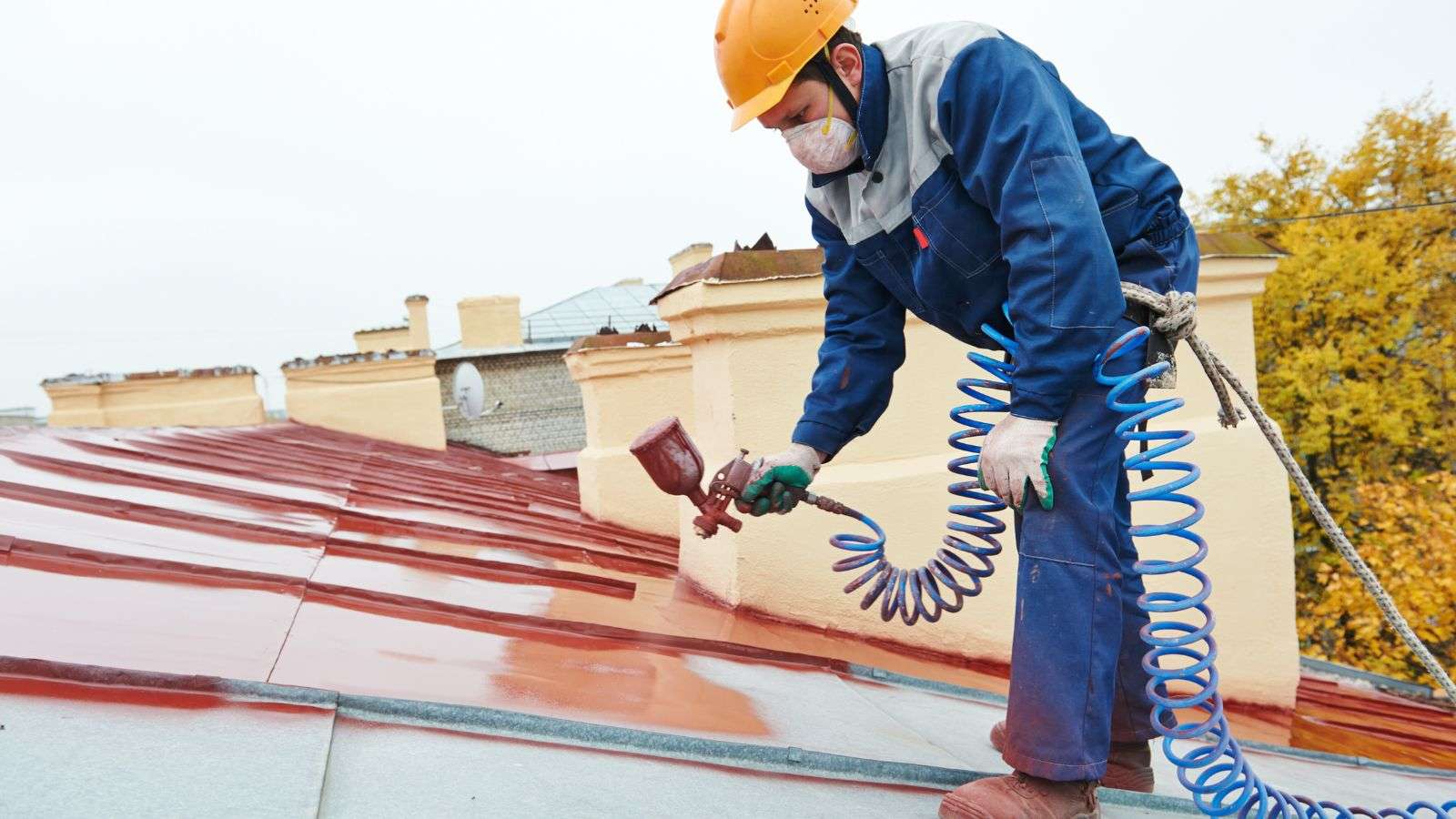
Liquid membranes offer a modern and highly effective solution for homeowners and businesses dealing with a leaky metal roof. The seamless, waterproofing properties of liquid membranes make sure your roof becomes more durable and weather-resistant.
In this article, we will explore the benefits, application process, cost, and maintenance of liquid membranes for a leaky metal roof, empowering you to make an informed decision about whether this solution is right for you.
7 Benefits of using liquid membranes in repairing your leaky metal roof
1. Enhanced waterproofing and leak prevention
Using liquid membranes for repairing your leaky metal roof offers several benefits. First, liquid membranes provide enhanced waterproofing, effectively sealing any cracks or gaps in the roof surface. This helps to prevent water leaks and moisture penetration, protecting your building from potential damage.
2. Seamless application and customization
Liquid membranes can be easily applied in a seamless manner, conforming to the unique shape and contours of your metal roof. This allows for a customized solution, ensuring that every part of the roof is effectively sealed. The flexibility of liquid membranes also allows for easy application around roof penetrations such as vents, chimneys, and skylights.
3. Long-lasting durability
One of the key advantages of using liquid membranes is their long-lasting durability. Once applied, these membranes form a protective barrier that can withstand harsh weather conditions, including UV radiation, extreme temperatures, and heavy rainfall. This longevity reduces the need for frequent repairs or reapplications, saving you time and money in the long run.
4. A cost-effective solution
Liquid membranes offer a cost-effective solution for repairing your leaky metal roof. Compared to other roofing materials or methods, liquid membranes are often more affordable. Their easy application process reduces labor costs, making it an efficient choice for both small and large-scale roof repairs.
5. Energy efficiency
Another benefit of liquid membranes is their ability to improve energy efficiency. By effectively sealing the roof surface, they help to prevent air leakage and thermal transfer. This can result in reduced heating and cooling costs as the membrane acts as an additional layer of insulation for your building.
6. Environmentally friendly
Liquid membranes are often environmentally friendly as they are free from harmful chemicals such as volatile organic compounds (VOCs). Their long lifespan reduces waste generated from frequent roof repairs or replacements. By choosing liquid membranes, you can contribute to a more sustainable and eco-friendly roofing solution.
7. Easy maintenance
Maintaining a roof repaired with liquid membranes is relatively easy. Regular inspections and simple maintenance tasks, such as cleaning debris or removing snow buildup, can help prolong the lifespan of the membrane. This low-maintenance feature saves you time and effort while ensuring the continued effectiveness of the repair.
How a liquid membrane addresses leaks in a metal roof
Liquid membranes are designed to effectively address leaks in a metal roof by creating a seamless and durable barrier that prevents water penetration. The chemistry behind liquid membranes involves the use of polymers, such as polyurethane or acrylic, which form a flexible and waterproof coating when applied to the roof surface.
These polymers have excellent adhesion properties, allowing them to bond tightly to the metal substrate and create a tight seal. As the liquid membrane cures, it forms a continuous, monolithic layer that is resistant to cracking, shrinking, or peeling.
This layer acts as a protective shield, preventing water from seeping through any existing cracks, gaps, or joints in the metal roof. The flexibility of the liquid membrane also makes sure it can expand and contract with the metal roof as it experiences temperature changes without compromising its waterproofing capabilities.
Discover the different types of liquid membranes for metal roofs
- Polyurethane liquid membrane: Polyurethane liquid membranes are commonly used for metal roof repairs. They offer excellent durability, flexibility, and adhesion to the metal surface. These membranes can withstand extreme weather conditions and provide long-lasting protection against leaks.
- Acrylic liquid membrane: Acrylic liquid membranes are another popular option for metal roof applications. They are known for their versatility and ease of application. Acrylic membranes have good UV resistance and can provide effective waterproofing for metal roofs.
- Silicone liquid membrane: Silicone liquid membranes are highly durable and resistant to UV radiation, making them ideal for metal roofs exposed to intense sunlight. They offer excellent weatherproofing properties and maintain their elasticity over a wide range of temperatures.
- Bitumen-based liquid membrane: Bitumen-based liquid membranes, also known as asphaltic coatings, provide a cost-effective solution for metal roof repairs. These membranes offer good waterproofing capabilities and can be applied easily with a brush or roller.
- Hybrid liquid membrane: Hybrid liquid membranes combine different polymer technologies to enhance specific properties. For example, a hybrid membrane may incorporate both polyurethane and acrylic components to provide a balance of durability and ease of application.
- Elastomeric liquid membrane: Elastomeric liquid membranes are formulated with elastomeric polymers that exhibit high elasticity and flexibility. These membranes can accommodate structural movements in the metal roof, making them suitable for areas prone to expansion and contraction.
- UV-reflective liquid membrane: UV-reflective liquid membranes are designed to reduce heat absorption by reflecting a significant amount of sunlight away from the roof surface. This type of membrane helps to improve energy efficiency by reducing cooling costs.
- Water-based liquid membrane: Water-based liquid membranes are environmentally friendly options that have low voc content. They offer good adhesion and waterproofing properties while minimizing the release of harmful chemicals during application.
How to apply liquid membranes on a metal roof
- Prepare the surface: Before applying the liquid membrane, make sure the metal roof surface is clean, dry, and free from any debris, rust, or loose paint. Use a broom or brush to remove dirt and dust, and a pressure washer if necessary to remove stubborn stains or contaminants. Repair any existing leaks or damage to the roof surface.
- Choose the appropriate liquid membrane: Select the type of liquid membrane that is suitable for your metal roof based on factors such as climate, desired durability, and specific requirements. Consider factors like UV resistance, flexibility, and ease of application.
- Prime the metal roof (if necessary): Some liquid membranes may require a primer for better adhesion to the metal surface. Follow the manufacturer’s instructions to determine if a primer is needed and apply it accordingly. Allow the primer to dry completely before proceeding.
- Mix or prepare the liquid membrane. If your chosen liquid membrane requires mixing or preparation, follow the manufacturer’s instructions carefully. Make sure the components are thoroughly mixed or prepared according to the recommended ratios.
- Apply the liquid membrane: Using a brush, roller, or spray equipment, apply the liquid membrane evenly onto the metal roof surface. Start from one end and work your way towards the other, ensuring consistent coverage. Pay extra attention to areas prone to leaks, such as seams, joints, and flashing.
- Allow proper drying and curing time: After applying the liquid membrane, allow sufficient drying and curing time as specified by the manufacturer. This duration can vary depending on the type of liquid membrane used and environmental conditions. Avoid foot traffic or any potential damage during this period.
- Inspect and apply additional coats (if necessary): Once the initial coat has dried and cured, inspect the roof surface for any missed areas or thin spots. If needed, apply additional coats of the liquid membrane following the same application method as before. This helps guarantee complete coverage and optimal waterproofing.
- Perform regular maintenance: After the liquid membrane has fully cured, establish a regular maintenance routine to prolong its lifespan and effectiveness. This may include periodic inspections, cleaning debris, removing snow buildup, and addressing any issues promptly.
Consider the possible disadvantages of using liquid membranes
- Application complexity: Applying liquid membranes to a metal roof may require specialized knowledge and skills. Improper application can lead to inadequate coverage, compromising the effectiveness of the membrane and potentially causing leaks.
- Surface preparation requirements: Achieving proper adhesion of liquid membranes often requires thorough surface preparation, such as cleaning, priming, and ensuring the roof is free from rust, loose paint, or other contaminants. This preparation can be time-consuming and may require additional materials or equipment.
- Curing time: Liquid membranes typically require a curing time before they fully bond and provide optimal waterproofing. This can range from a few hours to several days, depending on the specific product and environmental conditions. During this time, the roof should not be exposed to rain or foot traffic.
- Limited repair options: In the event of damage or deterioration, repairing specific areas of a liquid membrane can be challenging. Achieving a seamless patch or blending the new application with the existing membrane may be difficult, potentially compromising the overall waterproofing performance.
- Cost considerations: While liquid membranes can be cost-effective in terms of initial installation, the overall cost may vary depending on factors such as the size of the roof, the type of liquid membrane, and any additional surface preparation requirements. You need to consider both the upfront cost and long-term maintenance expenses.
- Vulnerability to punctures or abrasions: Liquid membranes, particularly those with thin applications, may be susceptible to punctures or abrasions from sharp objects or foot traffic. Extra care should be taken to avoid damaging the membrane during routine maintenance or other activities on the roof.
- Limited aesthetic options: Liquid membranes often provide a functional rather than decorative finish. The color options may be limited, and over time, the appearance of the membrane may change due to exposure to UV radiation or other environmental factors.
- Compatibility issues: Compatibility between liquid membranes and other roofing materials, such as flashings or sealants, should be considered. In some cases, additional compatibility products or techniques may be required to ensure proper integration and prevent potential issues.
What does it cost to use a liquid membrane on a metal roof?
The cost of using a liquid membrane on a metal roof can vary depending on several factors. These factors include the size of the roof, the type of liquid membrane chosen, the complexity of the roof’s structure, and any additional surface preparation required.
Regional pricing differences and labor costs can impact the overall cost. While liquid membranes can offer a cost-effective solution compared to other roofing materials or methods, it’s key to consider both the upfront installation cost and long-term maintenance expenses. If you want precise estimates that are specific to your metal roof repair project and an evaluation of your unique needs, it is best to consult with a professional roofing contractor.
How to make your liquid membrane last longer
First, establish a regular maintenance routine that includes periodic inspections to identify and address any potential issues promptly. Keep the roof surface clean by removing debris and ensuring proper drainage to prevent pooling of water. Avoid placing heavy equipment or objects directly on the roof to minimize the risk of punctures or damage.
If any repairs or touch-ups are needed, follow the manufacturer’s instructions and use compatible materials to maintain the integrity of the membrane. Finally, consider applying a protective coating or sealant over the liquid membrane to provide an extra layer of protection against UV radiation and other environmental factors.
Decide if liquid membrane is the right solution for your leaky metal roof
- If you have a leaky metal roof that requires repair, then liquid membrane could be the right solution for you.
- If you are looking for enhanced waterproofing and leak prevention, then liquid membrane can effectively seal cracks and gaps, protecting your building from potential damage.
- If you want seamless application and customization, then liquid membrane can conform to the unique shape and contours of your metal roof, ensuring that every part is effectively sealed.
- If you desire long-lasting durability, then liquid membrane can withstand harsh weather conditions, reducing the need for frequent repairs or reapplications.
- If cost-effectiveness is important to you, then liquid membrane offers an affordable solution compared to other roofing materials or methods.
- If you aim for improved energy efficiency, then liquid membranes can help prevent air leakage and thermal transfer, reducing heating and cooling costs.
- If you prioritize environmental friendliness, then liquid membrane is often free from harmful chemicals and can contribute to a more sustainable roofing solution.
- If easy maintenance is a factor for you, then liquid membrane requires minimal upkeep, saving you time and effort while ensuring the continued effectiveness of the repair.
Frequently-asked questions about liquid membranes and leaky metal roofs
- Can liquid membranes be applied to any type of metal roof? Liquid membranes can typically be applied to various types of metal roofs, including steel, aluminum, and copper. Nevertheless, before you decide whether the liquid membrane is compatible with your metal roof material, it is wise to talk to a professional roofing contractor.
- How long does a liquid membrane last on a metal roof? The lifespan of a liquid membrane can vary depending on factors such as the type of membrane used, environmental conditions, and proper maintenance. Generally, a well-applied and maintained liquid membrane can last for 10 to 20 years or more.
- Can liquid membranes be used for large-scale metal roof repairs? Yes, liquid membranes can be used for both small and large-scale metal roof repairs. They offer flexibility in application, allowing for customization and effective sealing of various roof sizes and shapes.
- Is it necessary to apply multiple coats of liquid membrane to a metal roof? Depending on the specific product and manufacturer’s recommendations, applying multiple coats of liquid membrane may be necessary to achieve the desired thickness and guarantee complete coverage. This helps enhance the effectiveness and durability of the waterproofing.
- How soon can a liquid membrane be applied after repairing a leak on a metal roof? You need to allow sufficient time for the repaired area to dry completely before applying the liquid membrane. The exact drying time may vary depending on factors such as weather conditions, the type of repair material used, and the extent of the repair. If this is the case, you should either consult a professional roofer or follow the manufacturer’s instructions.
- Can I walk on a roof coated with a liquid membrane? Avoid putting too much weight on the roof by keeping foot traffic to a minimum, even though liquid membranes are long-lasting. If access is required for maintenance or inspection purposes, it is recommended to use walkways or boards to distribute weight evenly and protect the membrane.
- Are liquid membranes an effective solution for severe roof damage? Liquid membranes are primarily designed for sealing cracks, gaps, and minor damages on metal roofs. A roofing contractor can assess the damage to your roof and recommend a repair or replacement plan after you contact them. This is especially important if the damage is extensive.
- Can I apply a liquid membrane myself, or should I hire a professional? While some homeowners may choose to apply liquid membranes themselves, it is recommended to hire a professional roofing contractor with experience in installing liquid membranes. Proper application is critical for achieving optimal waterproofing and longevity, and they have the knowledge, tools, and expertise to make sure it is done right.