
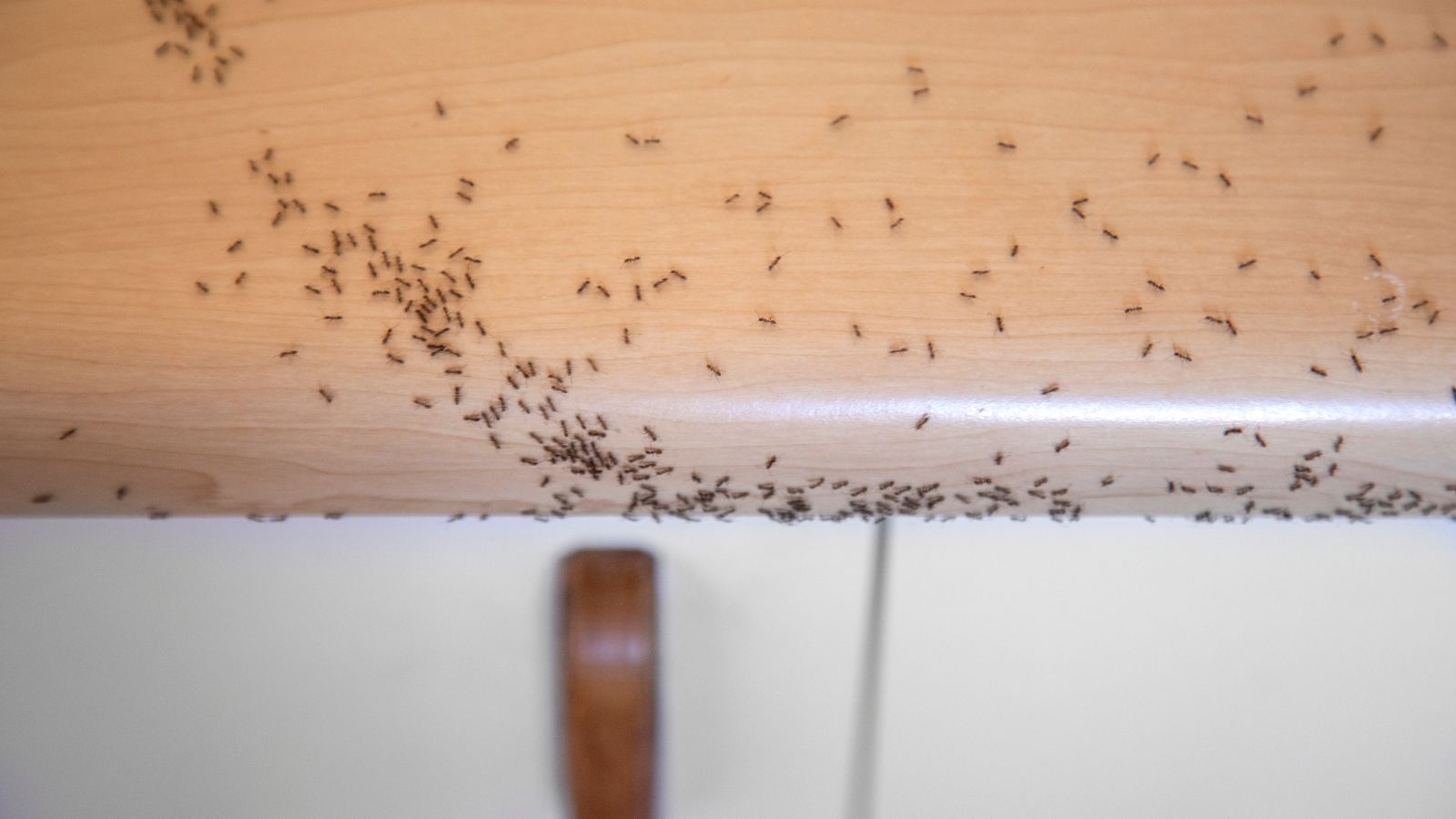
Argentine ants are a highly invasive species known for forming massive colonies and infiltrating homes, creating challenges for homeowners. Recognizing the signs of an infestation is the key to prevent further damage and maintain a safe, pest-free environment. In this article, we’ll explore the most common indicators of Argentine ant activity, where to look for them, and how BigHomeProjects.com can help you find trusted contractors to address pest-related issues effectively.
What are the common signs of an Argentine ant infestation?
Trailing ants are the most obvious sign of an Argentine ant infestation. These ants move in highly organized lines, often two to three ants wide, forming visible trails between their nesting sites and food sources. You’ll usually see them traveling along walls, baseboards, or even tree trunks outside. Unlike some ant species, Argentine ants don’t scatter when disrupted—they stick to their trails, which can sometimes stretch for several yards. They’re especially drawn to sweet foods, so if you notice a steady line of ants leading to your pantry or countertop, it’s a red flag. I had a trail running straight to a honey jar in my kitchen, and no matter how many I cleaned up, they kept coming back until I addressed their nest.
Another sure sign is spotting their nests in moist areas. Outside, they commonly build nests under mulch, logs, or rocks, while indoors they’re often found near leaky pipes or damp spaces like under sinks or behind appliances. Argentine ants are unique because their colonies often have multiple queens, which means their nests can grow rapidly and spread aggressively. If you crush one of these ants, you might notice a distinct musty odor—a telltale identifier for this species. They’re not just pesky; they pose a health risk by contaminating food with bacteria as they crawl across it. If you start seeing these signs together—trails, nesting near moisture, and food contamination—it’s time to act fast because their colonies expand quickly.
10 Clear Signs of an Argentine Ant Infestation to Watch For
1. Large Trails of Fast-Moving Ants
If you spot long lines of small, brown ants moving quickly along sidewalks, walls, or countertops, you’re probably looking at Argentine ants. These ants travel in wide, organized trails searching for food and water, often squeezing into places you wouldn’t expect—like electrical outlets or bathroom pipes. They don’t wander solo, so if you notice one, look for a whole parade nearby.
2. Sweet Food Suddenly Attracts Ants
Argentine ants love anything sweet, from fruit juice spills to crumbs from your last snack. If you start noticing ants making a beeline for sticky spots or sugary foods left out—even fruit in the trash—they’ve likely set up shop nearby. Their keen sense of smell helps them find sugar fast, so keep an eye on any unsealed sweet stuff.
3. Ants Showing Up in Unusual Places
Unlike some other species, Argentine ants don’t just stick to kitchens. You might find them popping up in bedrooms, closets, or even inside sealed containers. They’re persistent about finding new entry points and can slip through tiny gaps around doors or windows, so don’t be surprised if they show up somewhere odd.
4. Nesting in Moist Areas
Argentine ants prefer damp environments to build their nests. Check for them near leaky faucets, under sinks, around potted plants, or in bathrooms. If you’re seeing lots of ant activity near water sources, that’s a big hint they’re nesting close by. Even a constantly damp sponge or mop bucket can draw them in.
5. Unpleasant Musty Odor When Crushed
Crush an Argentine ant between your fingers (if you can catch one), and you might notice a faint musty or stale smell. It’s not as strong as some other ant species, but it’s definitely there. Most people don’t realize this subtle odor is a quick way to tell these ants apart from others.
6. Multiple Queens in One Colony
Unlike typical ant colonies with just one queen, Argentine ant colonies have several queens living together. You might not see the queens themselves, but if you notice the colony doesn’t seem to slow down after getting rid of a bunch of workers, it’s because more queens are still laying eggs and keeping the population booming.
7. Ants Swarming During Rainy Weather
Rain drives Argentine ants indoors looking for dry ground. If you see a sudden increase in ant activity after it rains or when there’s high humidity, they’re probably seeking shelter inside your home. Watch for new trails forming near doors and windows after storms.
8. Persistent Reinfestation Even After Treatment
These ants are notoriously tough to get rid of. You might treat an area and see them disappear for a short while, only for them to return from another part of the house or yard. Their interconnected colonies make it easy for them to regroup and come back again and again.
9. Ants Farming Aphids on Outdoor Plants
Argentine ants protect aphids (tiny plant pests) in exchange for the sweet honeydew aphids produce. You might spot these ants crawling up plant stems or clustered around new plant growth outside, “herding” aphids and keeping predators away. If your garden plants are sticky and crawling with both ants and aphids, Argentine ants are probably at work.
10. Tiny Ants with Uniform Color and Size
Argentine ants are small—about 1/8 inch long—and all look almost identical with a uniform brown color and no noticeable size difference between workers. Unlike some other species that have larger soldier ants or color variation, these guys are basically clones of each other, which makes identification easier if you get a good look at them.
How to identify Argentine ants and their behavior patterns
Argentine ants are small, smooth-bodied insects that measure between 1/16 to 1/4 inch in length, with a dark brown to black coloring. Unlike other ant species, they have a single node between their thorax and abdomen, which helps in identification. Their antennae are segmented with an elbowed shape, making them easy to distinguish if you get a close look. Queens are larger, up to 1/2 inch, and can often be found within the colony’s moist nesting sites. You’ll rarely see winged reproductives since Argentine ants don’t rely on swarming for colony expansion. Instead, they form satellite colonies, which makes them tough to track down entirely.
Behaviorally, Argentine ants are highly organized and cooperative. They form supercolonies with multiple queens and workers that share resources rather than competing. This unique trait allows them to displace native ant species easily. They’re primarily sugar feeders but will also scavenge proteins, especially during brood-rearing season. Because they don’t sting, they rely on sheer numbers and pheromone trails for foraging efficiency. They’re persistent—once they establish a route to food or water, they rarely stray from it unless the source is completely removed. This adaptability makes traditional baiting methods tricky unless you match your bait to their dietary needs at the time (sweet vs. protein-based).
Why Argentine ants invade homes and how they spread
Argentine ants invade homes primarily in search of food and water, especially during hot or dry seasons when resources outside become scarce. They’re drawn to sugary substances like jams, syrups, and fruit juices, but they’ll also go after proteins if their colony is rearing brood. What makes them particularly invasive is their ability to detect even the tiniest crumbs or spills that other pests might overlook. These ants are opportunistic—they’ll exploit any cracks around doors, windows, or foundations to gain entry. Once inside, they form trails along walls and floors to easily access food sources. I had them march through a hairline gap in my window frame, straight into a cabinet where I stored cereal; sealing that gap didn’t deter them until I addressed their nest outdoors.
Their spread is largely due to their supercolony structure, which allows them to fragment into satellite colonies. Argentine ants don’t rely on swarming like other ant species; instead, they use budding, where a portion of the colony moves with a queen to start a new nest nearby. This method enables them to expand rapidly into new areas without losing their connection to the main colony. They also spread geographically through human transportation—soil, plants, or goods infested with ants can introduce them to new locations. This is how they’ve become one of the most invasive ant species globally. Their ability to cooperate across colonies means homeowners often need to treat infestations at multiple sites simultaneously for effective control.
Key areas to inspect for an Argentine ant infestation
- Baseboards and wall edges: Argentine ants love to travel along edges, so check baseboards and the intersection where walls meet floors. Look for trails of ants moving in organized lines—this is often their preferred route to food or water sources. If you spot them here, trace their path to find where they’re entering or what they’re targeting.
- Under kitchen appliances: These ants are drawn to moisture and crumbs, making areas like under refrigerators, dishwashers, and stoves prime inspection zones. Pull out appliances if possible and check for signs of nesting or trailing ants. I found a small nest under the drip pan of my fridge—they were drawn to the condensation.
- Around sinks and drains: Moisture-rich areas like sinks and drains are common nesting sites for Argentine ants. Check under the sink cabinets for any activity, especially if you’ve got leaky pipes or standing water. You might find a trail leading directly to these spots, as they often use them as hydration hubs.
- Inside pantry shelves and food storage areas: Inspect your pantry for trails leading to sweet or protein-rich foods. These ants can exploit even sealed containers if they detect residue or a tiny gap in the lid. I had them invade a box of granola bars stored in a cabinet—double-check your food packaging for damage.
- Outdoor mulch beds and landscaping features: Argentine ants frequently nest under mulch, rocks, and other debris outside your home. Inspect flower beds, garden areas, and around the base of trees or shrubs. If you disturb these areas slightly, you may notice ants swarming as they attempt to protect their colony.
- Door and window frames: Small cracks around doors and windows are common entry points for Argentine ants. Inspect these areas closely for trails or activity. If you see ants consistently entering through one spot, seal it with caulk to prevent further access.
- Foundation cracks: Check any visible cracks or gaps in your home’s foundation or exterior walls. Argentine ants often use these openings to establish pathways into your home. If you spot activity here, it might indicate a larger infestation nearby.
- Garage corners and stored items: Garages often contain moisture-rich items like potted plants or cardboard boxes that can attract ants. Look in corners and around stored items where nests can be hidden. I found a nest in an old cooler stored in my garage—it was damp enough to provide perfect conditions.
- Near HVAC systems: Inspect around your air conditioning units or heating systems for signs of ant activity. These systems often produce condensation, which can attract Argentine ants looking for moisture.
- Trash bins and recycling areas: Trash bins, particularly those with food residue, are prime targets for Argentine ants. Check the edges and underside of bins for trails or nesting activity. Recycling bins with sugary drink containers are especially attractive—rinse them thoroughly to avoid drawing in pests.
How BigHomeProjects.com can connect you with contractors to address pest-related damage
We built BigHomeProjects.com to make it easier for homeowners like you to find trusted contractors who specialize in pest-related damage and prevention. If Argentine ants have invaded your home, they can cause more than just frustration—they can damage insulation, contaminate food storage areas, and compromise the structural integrity of your space if they nest in walls or foundations. Through our site, you can connect directly with pest control contractors who know how to locate and eliminate ant colonies effectively. Many of the experts listed on our platform understand how to tackle infestations while preventing future ones, so you’re not stuck dealing with recurring problems. If you need someone to seal entry points, repair ant-damaged wood, or treat landscaping to manage nests, we’ve got contractors ready to help.
What’s great about BigHomeProjects.com is that we focus on local professionals who know the unique challenges of your region. Argentine ants thrive in warm climates and damp environments, so contractors familiar with your area will be better equipped to address these conditions. If your infestation has led to water damage or structural issues, we also list handymen and repair experts who can step in to fix the mess. We don’t just help you find pest control; we make sure you can hire people who’ll handle the aftermath—whether it’s repairing a leaky foundation crack ants exploited or replacing damaged insulation where they nested. We’ve designed our platform so you can browse reviews, compare contractors, and hire with confidence, all in one place.
Leave a Reply
You must be logged in to post a comment.