
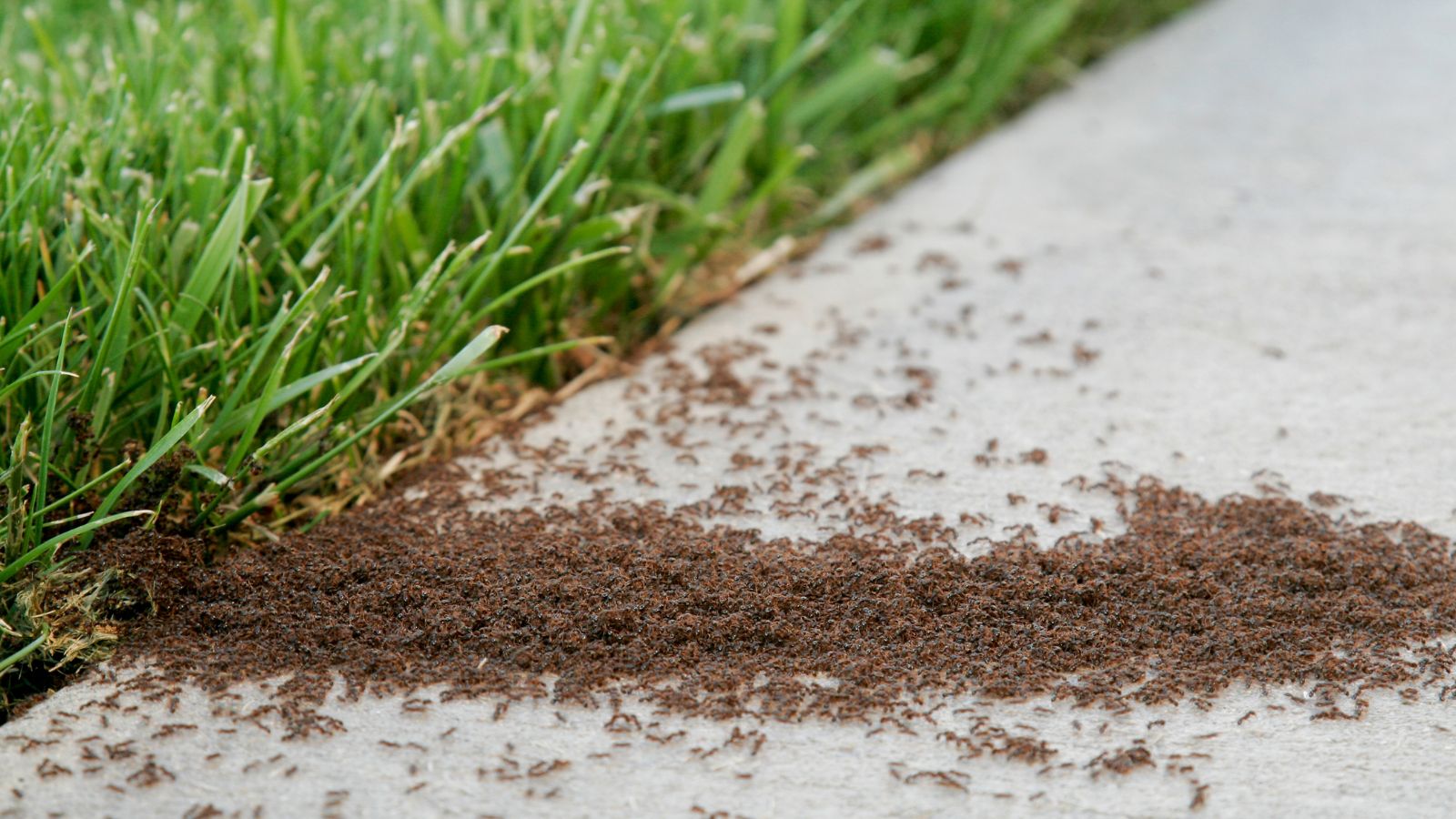
Ants are master builders, creating intricate nests that serve as homes, nurseries, and food storage hubs. Through teamwork, pheromones, and natural engineering techniques, ants showcase remarkable construction skills that adapt to their environment. This article explores how ants build their nests, uncovers fascinating methods behind their designs, and connects their ingenuity to lessons homeowners and contractors can apply to modern building projects.
How Do Ants Build Their Nests?
Ants build their nests through a mix of teamwork, chemical signaling, and precise excavation. Worker ants start by selecting a site, often influenced by soil moisture, temperature, and safety from predators. They use their mandibles to dig tunnels and chambers, carrying soil particles to the surface in a systematic way. As they excavate, they reinforce the walls using materials like saliva-soaked soil, small pebbles, or plant debris to prevent collapse. Pheromones play a huge role here—ants leave these chemical markers on the structure to direct others to areas needing more work or stabilization. This decentralized coordination ensures the construction progresses smoothly without one ant controlling the process.
From personal observation during a backyard project, I’ve seen how quickly ants can adapt their building strategy. Once, I disturbed a colony while gardening, and within hours, they began repairing damaged tunnels while creating a new entrance further away from the threat. Some species, like leafcutter ants, take it to another level by building underground fungus farms, optimizing space for both storage and food production. Ants also prioritize airflow—ventilation shafts or porous walls help regulate humidity and temperature inside the nest. Believe it or not, some supercolonies move as much as 40 tons of soil per year just to expand their nests! Their drive and efficiency are unmatched, and their nests are a testament to nature’s engineering at its finest.
10 Fascinating Ways Ants Build Their Complex Nests
1. Using Pheromones as a Blueprint
Ants don’t rely on a master architect—pheromones do the job. These chemical signals act as blueprints, guiding ants on where to dig or reinforce. If a section of the nest needs to expand, worker ants release more pheromones in that area, signaling others to pitch in. This self-organized system ensures efficient construction without chaos. What’s fascinating is that some species, like fire ants, even adjust pheromone levels based on soil type, ensuring their nests are sturdy regardless of environmental conditions.
2. Excavating with Precision
Ants use their mandibles like mini excavators to carve tunnels and chambers with remarkable precision. They transport loosened soil particles out of the nest in an orderly manner, minimizing structural instability. Some species, like harvester ants, dig straight down until they hit cooler, more humid soil layers, creating a natural climate-controlled environment for the nest. This digging process is so efficient that researchers have modeled excavation robots after their behavior!
3. Reinforcing Walls with Natural Materials
To prevent tunnel collapse, ants reinforce their walls using materials like saliva, plant fibers, or even tiny stones. A particularly creative example is seen in weaver ants, which bind leaves together using silk produced by their larvae. In underground nests, some ants mix soil with organic matter to create a stronger binding material. This technique not only strengthens the structure but also helps regulate humidity levels inside the nest.
4. Constructing Leaf Nests
Some ants, like weaver ants, skip underground nests altogether and build their homes in trees. They gather leaves and weave them together using silk from their larval offspring. The process involves pulling leaves into position while larvae are passed along like glue guns to “stitch” them together. This unique approach allows these ants to create aerial nests safe from predators and flooding.
5. Building Ventilation Systems
Ant nests often include built-in ventilation systems to regulate temperature and humidity. Desert ants create intricate chimney-like structures above ground to circulate air and keep the nest cool. Similarly, leafcutter ants design funnel-shaped openings that act like air vents to prevent heat buildup in their fungus gardens. This natural air-conditioning system ensures the colony thrives even in extreme weather conditions.
6. Forming Temporary Bivouacs
Army ants don’t build permanent nests; instead, they use their own bodies to form temporary shelters called bivouacs. These living structures are made by connecting their legs and mandibles to create protective walls around the queen and larvae. The bivouac can shift locations nightly as the colony moves in search of food, making it one of the most adaptable forms of ant housing.
7. Farming Fungus Underground
Leafcutter ants are famous for cultivating fungus as their primary food source. Their nests include specialized chambers for growing this fungus, which they feed with chewed-up plant material. The design of these fungus gardens maximizes airflow and moisture retention, creating ideal conditions for growth. This underground farming system is so efficient that it sustains entire colonies for years without needing outside food sources.
8. Creating Flood-Resistant Nests
Flooding is a major threat to underground nests, but some ants have evolved ingenious solutions. Fire ants, for example, build mounds with porous soil that drains water quickly. Others, like black carpenter ants, construct nests inside wood above ground to avoid flood risks entirely. In extreme cases, fire ants form floating rafts by linking their bodies together during floods—a survival tactic that saves the entire colony.
9. Recycling Organic Waste
Ants maintain cleanliness in their nests by designating waste disposal areas, often called “kitchens” or “refuse piles.” These zones are strategically located away from living chambers to prevent contamination and disease spread. Interestingly, some ant species recycle organic waste into building material or use it to fertilize fungus gardens. This waste management system keeps the nest hygienic and functional.
10. Expanding Supercolonies
When colonies grow too large for their nests, ants expand by creating satellite nests nearby. Argentine ants are particularly known for forming supercolonies spanning hundreds of miles! These interconnected nests share resources and workers through tunnels or pheromone trails, essentially functioning as one massive colony. This scalability allows ant colonies to adapt seamlessly to population growth without compromising efficiency.
Exploring the Structure of an Ant Nest: Tunnels, Chambers, and More
Ant nests are designed with incredible precision, featuring tunnels, chambers, and specialized zones that cater to the needs of the colony. Tunnels act as the main transportation routes, connecting different sections of the nest like a well-organized city. These are often dug at varying depths to access cooler soil layers for temperature regulation. Chambers serve specific purposes—egg nurseries, food storage, or even areas for grooming larvae. Some species, like harvester ants, create additional chambers to store seeds, organizing them by size for easier retrieval. Ventilation shafts are another key feature, allowing air circulation to prevent mold and keep humidity levels stable. The waste disposal areas are strategically placed far from the queen’s chamber to ensure cleanliness and reduce the risk of disease spread.
From personal experience observing an ant farm kit as a kid, I noticed how worker ants instinctively organized their space. They built one tunnel that branched into multiple chambers, each assigned a clear purpose. Interestingly, some species like the red wood ant build their nests partially above ground with mounds made of pine needles and soil, which act as insulation against cold weather. In these cases, tunnels extend below the mound into deeper chambers for added protection. What’s fascinating is that certain ants use small pebbles or plant debris to reinforce chamber walls—a technique that reduces collapse risks in sandy soil. Ants may not use blueprints like humans do, but their structural organization rivals any architect’s work!
Key Lessons from Ants: How Nature Inspires Efficient Building Practices
- Self-organization through decentralized coordination: Ants demonstrate how large-scale projects can succeed without a single leader. They rely on pheromones to guide others, ensuring that tasks like digging, reinforcing, and expanding are evenly distributed. This principle can inspire human projects, such as traffic flow systems or construction crews, by emphasizing local decision-making instead of top-down control. Think of how some cities now use adaptive traffic lights that adjust based on real-time conditions—ants mastered this concept millions of years ago.
- Adapting structures to environmental conditions: Ants build nests that respond perfectly to their surroundings, whether it’s the heat of the desert, the humidity of rainforests, or the risk of flooding. Fire ants create flood-resistant mounds while weaver ants build safe tree nests. Similarly, architects today design buildings with green roofs for insulation or floating homes in flood-prone areas—ideas that echo ant ingenuity.
- Resource efficiency in construction: Ants use materials available in their immediate environment, like soil, leaves, and even their own saliva, to construct durable nests. This approach minimizes waste and maximizes sustainability. Humans can take a page from this playbook by using locally sourced materials and incorporating recycled elements into building designs. Bamboo is increasingly popular in construction because it grows quickly and is renewable—nature’s version of efficient resource use.
- Ventilation and climate control: Many ant species integrate natural ventilation systems into their nests, like desert ants that build chimney-like openings to release heat. This mirrors how modern buildings incorporate passive cooling techniques, such as cross-ventilation or thermal chimneys. If you’ve ever walked into a house designed to stay cool without air conditioning, you’ve seen nature’s influence in action.
- Collaborative problem-solving: Ants work together to solve immediate challenges, like repairing a damaged tunnel or moving the nest during emergencies. Their ability to quickly adapt and collaborate can inspire human disaster response teams or construction crews working under tight deadlines. Rapid deployment of temporary shelters after natural disasters often mirrors the speed and teamwork displayed by ants forming bivouacs.
- Specialization within a group: Each ant has a specific role—digging tunnels, tending to the queen, or guarding the nest. This division of labor keeps the colony running smoothly. Similarly, construction projects benefit from specialized teams, such as electricians, plumbers, and structural engineers working toward a common goal. It’s proof that assigning the right job to the right person (or ant) leads to better outcomes.
- Long-term planning and scalability: Ants build nests with future growth in mind. Satellite nests or supercolonies allow them to expand seamlessly without starting from scratch. Humans could adopt similar foresight by designing modular homes or adaptable urban spaces that grow with population changes. Pre-fab housing units are a clear example of how this concept is already being applied.
- Efficient waste management systems: By designating specific areas for waste disposal far from living quarters, ants maintain hygiene and prevent disease. Cities could learn from this by improving zoning for waste facilities or incorporating efficient recycling programs into urban planning. Think about composting systems in neighborhoods—ants have been doing something similar underground for millions of years.
- Strengthening structures with minimal resources: Certain ants reinforce their nests using simple materials like saliva-soaked soil or plant fibers. This aligns with modern engineering practices like using lightweight yet strong materials (e.g., carbon fiber) in construction. It’s a reminder that you don’t always need costly or complex resources to build something durable and effective.
- Resilience through redundancy: Ant nests often include multiple entrances and backup chambers in case part of the structure is compromised. Similarly, buildings and cities should implement redundancy in critical systems like power grids or emergency exits. If you’ve ever stayed in a hotel with fire stairwells on both ends of the hallway, you’ve experienced this principle firsthand—even if it wasn’t inspired by ants directly!
Connecting Ant Nest Engineering to Big Home Projects on BigHomeProjects.com
When we look at how ants engineer their nests, the parallels to big home projects are surprisingly practical—and directly tied to what we do at BigHomeProjects.com. Just like ants rely on specialized roles within their colony, homeowners and investors need contractors with specific expertise for every part of a home project. Whether it’s excavation for a basement, HVAC installation for ventilation, or structural reinforcement during renovations, finding trusted professionals is critical. That’s why we focus on connecting you with contractors who know their craft, whether it’s laying the foundation, framing, or final finishes. Ants don’t leave construction to chance, and neither should you. Our directory ensures every contractor listed has proven experience, so you can build smarter without cutting corners.
Ant nests also remind us of the importance of adaptability and efficiency—traits we value in the contractors we list. Ants reinforce their structures with locally available materials, like saliva-soaked soil or plant debris, which minimizes waste and maximizes results. Homebuilders can take cues from this by using contractors who prioritize sustainable practices, like sourcing materials locally or recycling demolition waste. We make it easier for homeowners to find contractors who align with these principles. Whether it’s a green building project or something more conventional, our site helps you find pros who can handle projects of any size while staying cost-effective and environmentally responsible. Just like ants thrive by working as a team, we thrive on helping homeowners and contractors collaborate seamlessly.
Leave a Reply
You must be logged in to post a comment.