
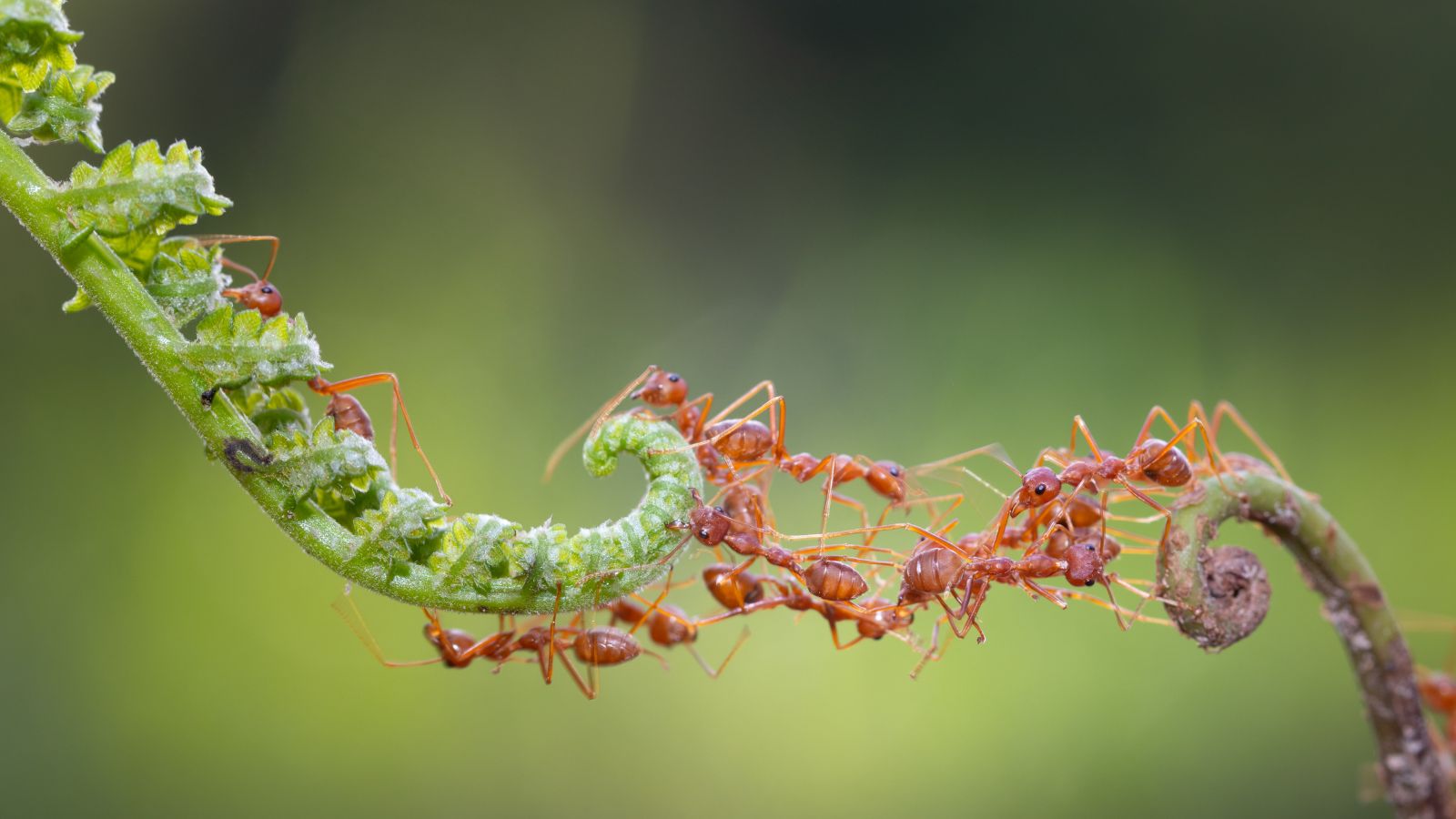
Ants are remarkable creatures known for their advanced communication systems that rely heavily on their antennae. From sensing pheromones to sharing information through antennal touches, these tiny insects work together seamlessly to maintain colony organization and tackle complex tasks. In this article, we will explore how ants use their antennae to communicate, draw parallels to effective collaboration, and discuss what homeowners and contractors can learn from their teamwork for successful big home projects.
How Do Ants Communicate Within Their Colonies?
Ants communicate within their colonies primarily through chemical signals, known as pheromones, and tactile interactions involving their antennae. Their antennae act as highly sensitive tools for detecting pheromones, which are secreted to convey specific messages. When scout ants locate food, they release trail pheromones to guide foragers directly to the source. You’ve probably seen ants marching in a straight line—this isn’t random; it’s them following that precise chemical trail. Antenna touching, or antenation, is another form of communication. Ants tap each other’s antennae to exchange information about colony roles, conditions, or food availability. It’s like their version of shaking hands but with far more complexity. Studies show that antennal interaction can help ants discern if a fellow ant belongs to their colony by recognizing unique cuticular hydrocarbons (CHCs) on the surface of their exoskeleton.
On a practical level, you could compare this communication system to how people coordinate during group projects—clear roles, shared information, and constant feedback loops. Personally, I’ve observed ants in my backyard building their nests in coordinated waves. When I disrupted one section of their work accidentally, the ants regrouped using antenna touches and pheromone signals to redirect efforts without losing efficiency. That kind of teamwork is fascinating! Ants also employ alarm pheromones when danger is present, triggering defensive or evasive behavior throughout the colony. And here’s a cool fact: ants can even use their antennae to detect vibrations indirectly when alarm signals spread across surfaces. This layered communication system allows them to adapt to environmental changes seamlessly, ensuring colony survival.
10 Fascinating Ways Ants Use Their Antennae to Communicate
1. Detecting Colony Mates with Antenna Touching
Ants use their antennae to identify whether another ant is a colony mate or an intruder. When two ants meet, they engage in antennal touching, which allows them to detect chemical cues like cuticular hydrocarbons (CHCs) on each other’s exoskeletons. Think of it as a secret handshake—if the chemical profile matches, they proceed peacefully; if not, it could mean an attack is coming. This method ensures colony integrity and prevents freeloaders from stealing resources. Invasive species like Argentine ants are particularly adept at this, often overwhelming native species by using their antennae to quickly establish dominance.
2. Mapping Out Food Trails with Pheromones
Your typical ant line to a picnic crumb isn’t random; it’s a well-coordinated operation. Ants use their antennae to sense trail pheromones laid down by scouts who’ve found food. If the scent is strong enough, more ants follow, reinforcing the trail with their own pheromones. What’s interesting is that ants can “read” how fresh or concentrated the trail is, which helps them decide if the food source is worth the trip. If you’ve ever tried to disrupt an ant trail and watched them regroup quickly, it’s their antennae guiding them back on track.
3. Relaying Alarm Signals During Emergencies
When danger strikes, ants release alarm pheromones to alert nearby colony members. The antennae pick up these chemical signals instantly, triggering defensive behaviors like swarming or retreating to safety. What’s unique is how specific these signals are—some alarm pheromones tell ants to attack, while others signal evacuation. Termites, for example, release different chemical signals depending on whether the threat is a predator or a rival colony. If you’ve ever seen ants scatter after a sudden vibration or disruption, it’s their antennae translating those chemical alerts into action.
4. Coordinating Group Construction Projects
Ant colonies are master builders, creating intricate tunnels and chambers underground. Antennae play a big role in coordinating these massive efforts by enabling ants to share tactile and chemical cues about where to dig or deposit materials. Ants use antennal touches to communicate where soil needs reinforcement or where new digging should begin. Fire ants are especially skilled at this, forming living rafts during floods by constantly exchanging information through their antennae.
5. Navigating Through Complex Terrain
Ants use their antennae as sensory guides when moving through challenging environments. Tapping surfaces and detecting microtextures, ants can navigate narrow tunnels or climb uneven terrain without losing balance. Some desert ants even combine this tactile input with polarized light sensing for precise navigation across vast, featureless landscapes. If you’ve ever watched an ant maneuver through a crack in your sidewalk, you’re seeing their antennae at work.
6. Sharing Food Through Trophallaxis
Trophallaxis, or mouth-to-mouth feeding, is more than just sharing food—it’s also a way for ants to exchange vital information about the colony’s needs. Antennae play a role here by signaling when and where trophallaxis should occur. Hungry worker ants use antennal taps to request food from foragers returning from a successful hunt. This process ensures the colony remains well-fed and balanced, even in resource-scarce conditions.
7. Regulating Social Hierarchy and Roles
Ants use their antennae to help maintain order within their social hierarchy. Worker ants often antennate queens or higher-ranking individuals as a form of submission or acknowledgment of their status. On the flip side, queens use antennal signals to assert dominance and regulate worker behavior. This dynamic makes sure that tasks like brood care, foraging, and nest defense are carried out efficiently without unnecessary conflicts.
8. Sensing Vibrations for Indirect Communication
While antennae aren’t primarily designed for detecting vibrations, they can sense subtle movements transmitted through surfaces. When soldier ants tap their heads against the ground during an alarm response, nearby workers pick up these vibrations with their antennae and react accordingly. This type of communication is especially useful in dark or confined spaces where chemical signals might not spread as easily.
9. Cleaning and Grooming Colony Members
Ants use their antennae not only for communication but also for maintaining colony hygiene. They groom each other by running their antennae across bodies to remove debris or parasites. This behavior reinforces social bonds while keeping the colony healthy and disease-free. Interestingly, certain ant species have specialized grooming behaviors that target specific pathogens or mites that threaten their survival.
10. Exploring New Environments with Antennae Probing
When ants encounter unfamiliar territory, their antennae become their primary tool for exploration. Probing surfaces and detecting chemical residues, ants gather critical information about potential threats or resources in the area. This behavior is especially prominent in scout ants tasked with finding new food sources or nesting sites. It’s like sending out an investigative team armed with highly sensitive sensors—efficient and thorough!
Methods Ants Use to Strengthen Colony Organization
- Chemical Communication (Pheromones): Ants rely heavily on pheromones to coordinate tasks like foraging, defense, and recruitment. These chemical signals act as invisible instructions that guide colony members toward food sources, warn of danger, or mark territories. When a scout ant finds food, it lays down a pheromone trail that others follow. What’s impressive is how ants can differentiate between pheromones meant for alarm versus those meant for navigation—a skill essential for efficient organization.
- Division of Labor: Every ant has a specific role in the colony, whether it’s a worker, forager, soldier, or queen. This division isn’t random; ants use tactile and antennal communication to delegate tasks based on age and physical capability. Younger ants often start with brood care before moving on to foraging as they mature. This system makes sure that all essential tasks are covered without overlap or inefficiency.
- Nest Maintenance and Expansion: Ants constantly work to maintain and expand their nests. They use antennal touches and chemical signals to coordinate where to dig, deposit soil, or repair damaged areas. In species like leafcutter ants, workers use their antennae to decide where to place fresh leaves for fungal cultivation. These interactions prevent chaos during large-scale nest-building efforts.
- Resource Allocation: Ants have a remarkable ability to allocate resources efficiently within their colonies. Foragers communicate food quantities and quality using antennal signals and trophallaxis (mouth-to-mouth feeding). If food is scarce, they redirect energy toward essential functions, like feeding larvae or supporting the queen. This adaptability ensures long-term survival even in harsh conditions.
- Conflict Resolution: While ant colonies are highly cooperative, disputes can occur—especially when roles overlap or resources dwindle. Ants use their antennae and chemical cues to recognize hierarchy and resolve conflicts quickly. If a worker challenges a queen’s dominance, antennal interactions often settle the dispute without escalation.
- Colony Defense Systems: Defense isn’t just about fighting off predators; it’s also about protecting resources and maintaining order. Ants use alarm pheromones combined with tactile signals to mobilize soldiers in case of threats. Species like army ants take this one step further by forming living barricades using their bodies to block intruders—all coordinated through antennal communication.
- Environmental Adaptation: Ant colonies adapt their behavior based on environmental changes, like temperature shifts or habitat disruptions. Scouts use their antennae to probe new areas for potential nesting sites or food sources while relaying findings back to the colony. This ability to continuously adjust makes sure that the colony thrives regardless of external challenges.
- Teaching and Learning Among Workers: Believe it or not, ants engage in rudimentary teaching behaviors. Tandem running—a process where an experienced ant leads an inexperienced one using antennal guidance—is a common way scouts teach others how to find distant food sources. This mentoring system strengthens colony efficiency over time.
- Social Bonding Through Grooming: Ants strengthen social bonds by grooming each other using their antennae. This behavior isn’t just about hygiene; it also reinforces trust and cooperation among colony members. In invasive species like Argentine ants, grooming plays a significant role in maintaining unity during territorial expansion.
- Emergency Response Coordination: During emergencies like floods or predator attacks, ants use their antennae to relay rapid-fire signals that mobilize the colony into action. Fire ants link together to form rafts during floods—a coordinated effort achieved through antennal communication and tactile feedback. This level of organization ensures survival during crises.
What Ant Communication Can Teach Us About Big Home Projects and Collaboration
Ants are a masterclass in coordination, and there’s a lot we can take from their efficiency when managing big home projects. In their colonies, ants assign specific roles—some forage, others build, while others defend the nest. They rely on clear communication to keep everything running smoothly. That’s exactly what we help facilitate at BigHomeProjects.com. Think of us as the pheromone trail for your home improvement needs. Homeowners looking for trusted contractors can easily navigate through our directory, just like ants follow a trail to their food source. No time wasted wandering around aimlessly—our platform connects you to the right pros for the job, whether it’s a kitchen remodel or a new roof.
On the contractor side, there’s a lesson in how ants strengthen their colony by working together seamlessly. We help contractors and handymen find consistent work by connecting them with homeowners who genuinely need their expertise. Just like ants rely on each other to build something bigger than themselves, we create an ecosystem where everyone benefits—homeowners get quality work done, and contractors get steady projects without the hassle of chasing leads. It’s all about aligning the right skills with the right opportunities, just like ants using their antennae to direct efforts where they’re needed most.
Leave a Reply
You must be logged in to post a comment.