
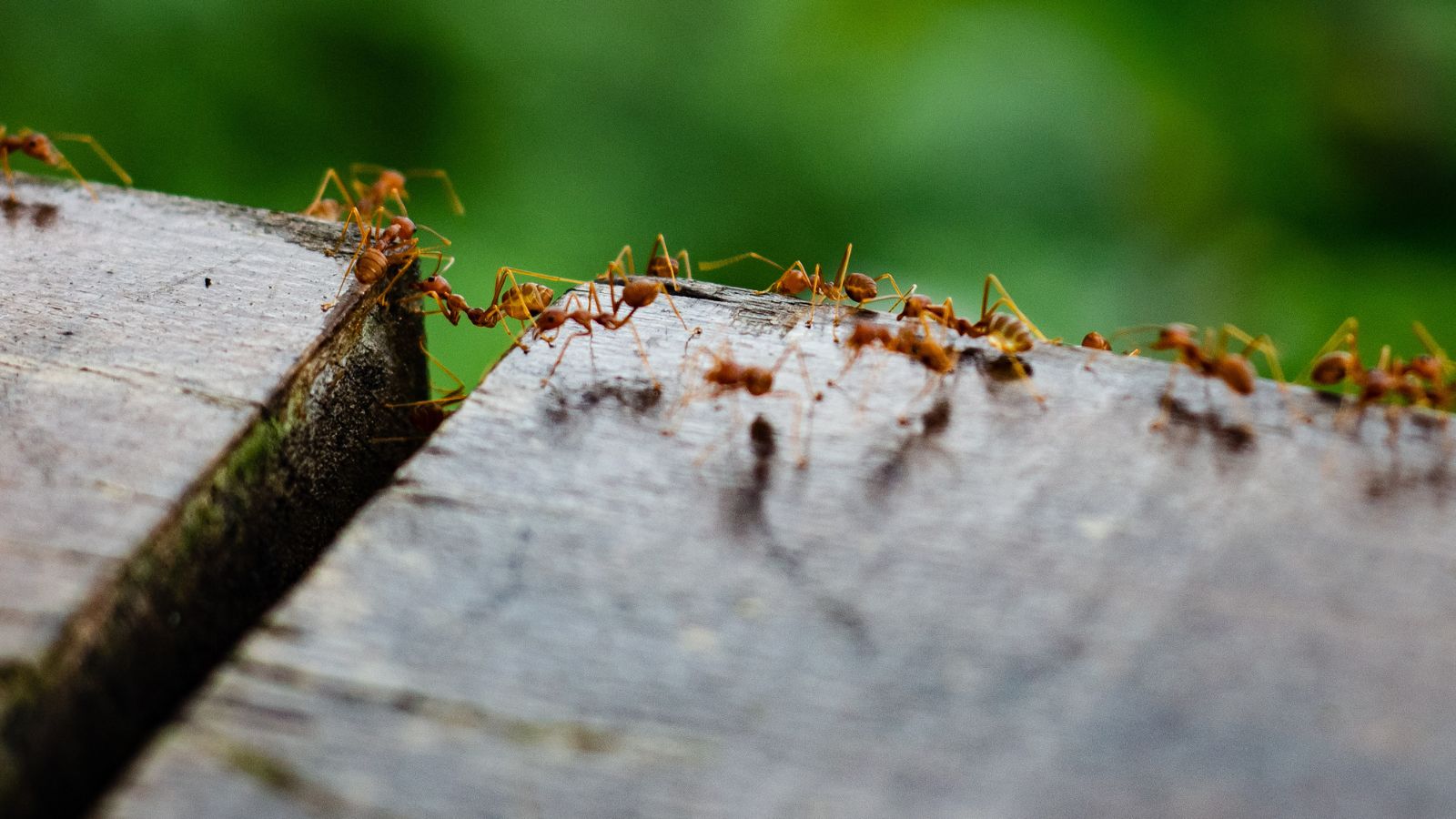
Ants rely heavily on scent to navigate and explore their surroundings, using a variety of chemical signals to find food, return to their nests, and communicate with each other. This article breaks down five key ways ants use scent for navigation, including how they create olfactory maps and follow pheromone trails. Understanding these natural navigation methods can offer surprising insights relevant to problem-solving and organization, topics explored further on BigHomeProjects.com.
How do ants find their way using scent in complex environments?
Ants find their way in complex environments using a combination of stereo olfaction and chemical trail following. They sniff with both antennae independently, comparing the intensity of specific odor molecules, such as nest-specific hydrocarbons or food-related compounds, to create a mental olfactory map. This spatial scent processing helps them determine direction and distance even when visual landmarks are scarce or confusing. Tunisian desert ants excel at using this method, detecting subtle differences in odor concentration to locate their nest entrance after long foraging trips across featureless terrain. This ability to parse environmental cues like wind-borne food odors and nest scents allows ants to navigate efficiently despite obstacles and changing conditions.
In addition to individual scent tracking, ants rely heavily on pheromone trails deposited along paths to communicate routes to nestmates. These trails often contain formic acid and methyl ketones, forming a chemical roadmap that guides others to rich food sources or back to safety. I observed a group of leafcutter ants using scent marks during cooperative transport of large leaves; they continuously updated chemical signals to coordinate movement and avoid errors caused by misreading trails. Colonies also use unique olfactory signatures near the nest entrance as home markers, helping reduce confusion in dense environments with many competing colonies. This sophisticated interplay of personal odor sampling and collective chemical signaling guarantees ants maintain orientation, optimize foraging efficiency, and protect their territory even in the most complex settings.
5 Ways Ants Use Scent to Navigate and Explore Their World
1. Chemical Trails as Roadmaps
Ants lay down chemical trails using secretions like formic acid and methyl ketones to create clear paths for others in the colony. These trails don’t just lead straight to food sources; they adapt and change depending on traffic flow and obstacles, almost like a living GPS system. When you watch ants following these trails, you might notice some ants reinforcing the scent while others weaken it, which helps optimize routes over time. This dynamic trail-laying allows the colony to respond quickly to environmental changes, like a sudden rain washing away scents or new barriers popping up.
2. Scent Marking for Group Coordination
When ants work together on big tasks, such as moving large food items, they add extra scent marks to help coordinate their movements. This scent marking acts like a silent communication channel, guiding each ant’s position relative to the object and the group. If you ever try shifting something heavy with friends, you’ll see how important signals and timing are; ants do this chemically with surprising precision. Although this system can sometimes cause confusion if paths get mixed up, it generally increases efficiency during complex cooperative efforts.
3. Using Environmental Cues in Navigation
Ants don’t rely only on scent molecules—they also pick up environmental cues like wind direction and terrain features to improve navigation accuracy. Certain desert ants sniff odors carried by crosswinds and adjust their route upwind to zero in on food sources. This behavior shows how ants combine chemical signals with physical surroundings, which helps them avoid getting lost even in barren or cluttered landscapes. So, when you see ants zigzagging or changing direction, they’re likely tuning into these subtle environmental hints.
4. Colony-Specific Scent Profiles
Each ant colony develops a unique blend of scents that acts like a fingerprint for its members. These colony-specific odors help ants recognize nestmates and distinguish friend from foe, reducing conflicts and improving social cohesion. When ants return to their nest, they match scents around the entrance with their internal memory of the colony’s signature odor. This olfactory tagging works alongside visual cues, creating a reliable homing system that’s especially useful in crowded habitats where many colonies live close together.
5. Alarm and Defense Through Pheromones
Ants release alarm pheromones from glands near their mandibles to alert nestmates when danger strikes. This chemical signal spreads rapidly through the colony, triggering defensive behavior or quick escape responses depending on the threat. In addition, formic acid serves dual roles—ants spray it as a weapon against predators and use it as a territorial marker to warn outsiders. This combination of offensive and defensive scent use helps ants protect their colonies without wasting energy on unnecessary fights, showing how versatile chemical communication can be in the ant world.
How Stereo Olfaction Helps Ants Detect Direction and Location
Ants use stereo olfaction by comparing scent intensities detected on their left and right antennae to figure out where smells come from. Each antenna senses chemical concentrations independently, and ants analyze differences in these signals to calculate the direction of an odor source. This process works much like how humans use two ears to locate sounds. If the left antenna picks up a stronger scent concentration than the right, the ant knows to turn left to get closer to the smell. Research shows that ants can detect minute variations in odor intensity as low as a few parts per billion, which allows them to navigate accurately even when the scent trail is weak or disrupted.
Stereo olfaction also helps ants build a spatial odor map, allowing them to track moving or changing scent sources. As ants move, they continuously update this map by sampling odors at different points using their antennae, which lets them estimate distance and direction in real-time. This ability reduces their reliance on visual cues, especially in dark or cluttered environments. In one study, desert ants demonstrated remarkable precision by using stereo olfaction to return directly to their nests across featureless sand dunes, where visual landmarks are scarce. This method saves energy and time that ants would otherwise spend searching blindly for food or home.
The Role of Pheromone Trails in Ant Communication and Navigation
Pheromone trails act as chemical highways that ants lay down to guide nestmates to resources or back to the colony. These trails consist of specific compounds like formic acid and methyl ketones, which evaporate at controlled rates to keep the signal fresh but not permanent. Ants reinforce strong trails with additional pheromone deposits, increasing trail intensity and attracting more workers to high-value food sources. The strength and quality of these pheromone signals directly influence foraging efficiency and resource allocation within the colony, sometimes increasing food retrieval speed up to 60%. When I watched a colony of Argentine ants, I noticed how quickly they intensified trail markings after discovering a sugary spill, leading to a massive and organized recruitment effort.
Pheromone communication also helps ants avoid dangerous or depleted routes. If a path no longer leads to food, fewer ants reinforce the trail, causing it to fade naturally over hours or days. This fading acts like a chemical “traffic light,” signaling others to seek alternative routes without wasting energy. Some species use multiple pheromones simultaneously to encode complex messages, such as signaling danger or marking territorial boundaries. This layered chemical language enhances colony survival by keeping foragers informed about environmental changes and threats. In my experience observing carpenter ants, their ability to switch trails quickly after disturbance demonstrated this chemical flexibility in real time.
Key Chemical Signals Ants Use for Navigation and Colony Defense
- Formic Acid: This chemical serves multiple roles, acting both as a trail marker and a defense weapon. Ants spray formic acid to fend off predators or competitors, creating a chemical barrier. It also helps mark territory boundaries, warning other colonies to stay away. Wood ants use formic acid aggressively in fights, which shows how important this chemical is for colony survival.
- Methyl Ketones: These compounds are key components of pheromone trails that ants deposit during foraging. Methyl ketones have the right evaporation rate, which keeps trails effective without lingering too long and causing confusion. Some ants adjust the mix of these chemicals to signal different messages, such as food quality or urgency, adding a layer of complexity to their navigation system.
- Mandibular Gland Pheromones: These pheromones trigger alarm responses within the colony. When an ant senses danger, it releases chemicals from its mandibular glands that cause others to either attack or flee. This rapid chemical broadcast ensures the whole colony reacts quickly to threats, improving their chances of survival during predator attacks or environmental hazards.
- Cuticular Hydrocarbons: These odor molecules coat the ant’s exoskeleton and serve as colony-specific signatures. They help ants recognize family members and reject outsiders, which is crucial in crowded environments with many overlapping colonies. This chemical “ID card” maintains social order within the nest and prevents infiltration by rival ants.
- Trail Pheromone Modulators: Some ants produce additional chemicals that tweak the main pheromone trail’s scent profile, allowing fine-tuning of communication signals. These modulators can indicate factors like trail strength or direction changes. During cooperative transport, ants add modulators to help teammates adjust their movements smoothly without verbal cues or visual signals.
What Homeowners Can Learn from Ant Navigation on BigHomeProjects.com
We see some clear lessons from ant navigation that homeowners can apply when looking for contractors on BigHomeProjects.com. Ants use precise chemical trails and scent marking to communicate and find the best paths to resources within their complex environments. Similarly, homeowners need reliable signals—like reviews, ratings, and verified contractor profiles—to guide them through the sometimes confusing process of picking the right professional for their projects. Just like ants adjust their routes when trails weaken or obstacles appear, homeowners should use updated information on our site to avoid dead ends or poor choices and find contractors who match their specific needs.
Our platform functions like a carefully maintained map for your home projects, helping you navigate local options with clarity and confidence. Ants’ ability to coordinate through chemical cues shows how important clear, trustworthy communication is in group success. We focus on connecting you with contractors who have proven track records and real feedback, cutting through noise so your search feels less like wandering in the dark. When you use BigHomeProjects.com, you tap into a system where everyone’s input combines to create a reliable path forward—just like how ants work together to explore and conquer their environment effectively.
Leave a Reply
You must be logged in to post a comment.